
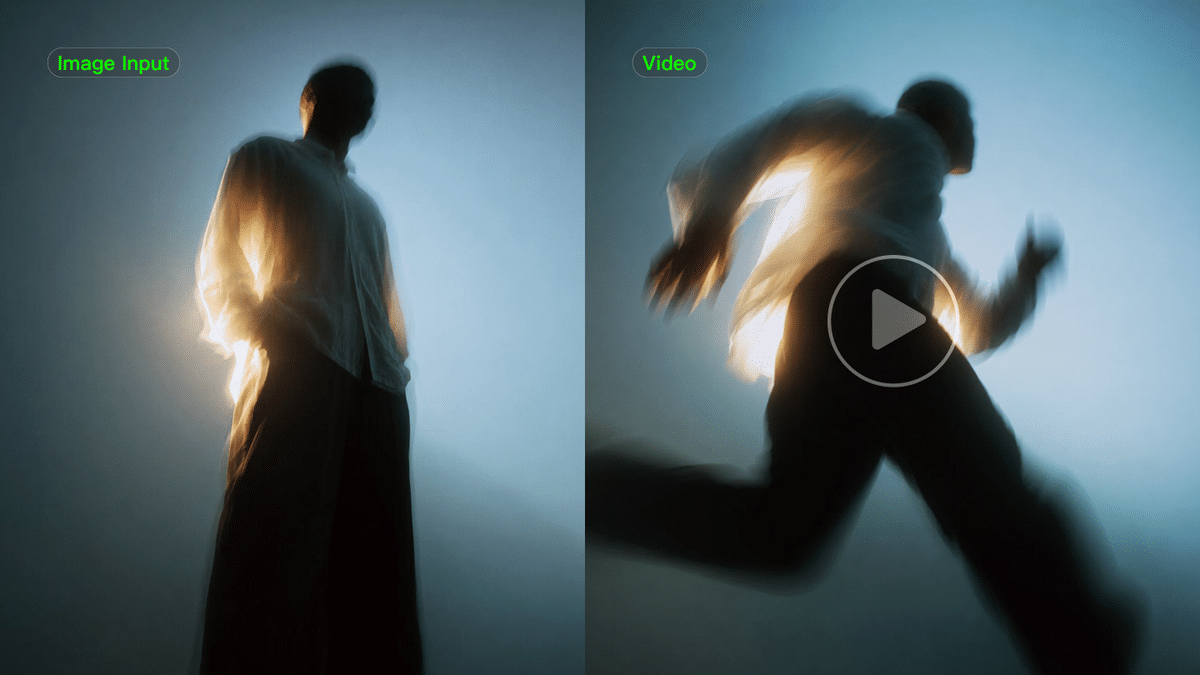
The most advanced image-to-video artificial intelligence of 2026 will be able to transform a still image into a production-ready and moving clip within a few minutes. I tried the most popular features of motion, creative control, model selection, editing capabilities, cost, and realistic working processes to creators, marketers, developers, and startups.
An effective photo to video AI tool must not just add random movement. The most effective platforms maintain the face, objects, composition, and visual identity and provide creators with control over camera movement, timing, style, and audio in some instances. Many also put many things in the same place, image generation, a creative workflow that encompasses AI image editor, video editing, upscaling, and many more.
In September 2026, Magic Hour is unique in that creators can generate images to video, but also with a wide range of AI media tools. Other options that can be considered are runway, Kling, Luma, Pika, and Adobe Firefly, and depending on the kind of content that is being generated.
Image-to-Video AI Tools: Best at a Glance
| Tool | Best For | Image-to-Video | Other Capabilities | Free Plan | Platforms |
| Magic Hour | All-in-one AI creation | Yes | Image, video, editing, lip sync, face swap, talking photos | Yes | Web, API |
| Runway | Professional video workflows | Yes | Video editing, image generation, audio, video-to-video | Yes | Web |
| Kling AI | Realistic motion and cinematic clips | Yes | Text-to-video, character and motion control | Limited/free access | Web |
| Luma | Cinematic generation | Yes | Image generation, video editing, creative agents | Limited | Web, iOS |
| Pika | Social and experimental content | Yes | Effects, image-to-video, video effects | Yes | Web |
| Adobe Firefly | Commercial creative workflows | Yes | Image, video, audio, editing | Yes | Web, mobile |
1. Magic Hour
Magic Hour is a more comprehensive project, compared to a standard image-to-video generator. It unites image creation, image editing, video creation, face swap, lip sync, speaking pictures, upscaling, and other AI-creation features into a single workflow.
Its picture-to-video service allows one to upload an image, explain what kind of movement it should have, and create an animated video. The platform accommodates several video models, such as Sora 2, Veo 3.1, Kling, Seedance, LTX, and Wan models.
One of its biggest advantages is model choice. Creators do not have to make a single generation model commitment, but can test various models in different shots and styles.
Magic Hour is especially applicable in cases where image-to-video is just a component of a larger AI content workflow.
Pros
Wide variety of video and image models in a single location.
Strong image-to-video workflow
Swapping faces, lip-reading, talking photos and video editing.
Pre-designed templates to create quicker.
Free-trial for a choice of tools.
Developer access to API.
Paid plan commercial use.
Desktop and mobile workflow based on browsers.
When bought individually, the credits do not go out of date.
It is possible to create several generations on paid plans.
Social content, advertisements, product videos, and creative experiments.
Image-to-video API Magic Hour also provides developers who wish to incorporate generation into their applications with an image-to-video API. The API promotes various models, resolutions, aspect ratios, and production workflow
I like its breadth too. A creator is able to begin with an image, edit it, animate it, add speech with lip sync, and keep working with other AI video tools without switching between a variety of different services
Cons
High-level models are paid.
High-resolution generations have the ability to drink credits.
Depending on the model chosen and input image, the quality of output may be different.
To identify the appropriate visual style, users might have to experiment with a number of models.
Price and plans
Magic Hour is Free. Creator is priced at $19/month or 144 billed yearly (12/month effective), and Pro is priced at 39/month or 300 billed yearly (25/month effective). Creator has 144,000 credits per year, and Pro has 300,000. Billed features are premium exports, commercial use, API access, and watermark-free output.
Standalone credit packs are also available at Magic Hour, with 4,000 credits costing at least $10, and the credits bought are never wasted
To developers, its image-to-video API is now priced at usage-based rates, and can support multiple popular video models.
2. Runway – Ideal in Professional Video Workflows.Runway is also among the best solutions that creators require image-to-video and a wider professional video environment.
Its Gen-4.5 includes picture-to-video and picture-to-text, and it has detailed prompts regarding camera choreography, composition of scenes, time, and weather variations.
Pros
Vigorous action and immediate response.
Image-to-video and text-to-video
Extensive creative tools
Professional-oriented workflow
Good alternative to filmmakers and agencies.
Higher plans with third-party models.
Cons
Generating credit many times can lead to its high consumption.
Certain sophisticated models need more advanced plans.
It is limited to free usage.
The site may be more production oriented than fast social media.
Price and plans
Runway has a Free plan, which includes a single allocation of 125 credits. The standard has 625 credits per month, Pro has 2250 and Max has 9500. Standard and Pro credits have monthly limits, whereas Max offers one month of rollover credits.
3. Kling AI
Kling AI is now an important alternative among those creators who value movement of still images.
Its visual to video features come in especially handy when animating individuals, products, settings and scenes in films when visual consistency is important.
Pros
Strong motion generation
Good results for cinematic scenes
Useful camera movement
Character-focused workflows
Appropriate to social video and advertising ideas.
Cons
The cost of credit may increase speedily.
Access to models and availability depends on the plan.
Still, the results are still very dependent on the source image and prompt.
Not as extensive as a complete editing environment as others.
Price and plans
Kling bases his model on credit, having free or restricted access based on the current account and the current offer. Paid access offers more generating capacity and advanced capabilities.
To creators who are mainly interested in making an image appear to move convincingly and not deal with a full post-production process, Kling should be tested with other well-known models.
4. Luma
Luma has moved towards a wider creative platform based on image, video, and AI-assisted production. It has a current video generation technology that consists of Ray models as well as its platform has access to other image and video models.
Creators particularly interested in cinematic movement, creative iteration and more agent-assisted workflows are of particular interest to the platform.
Pros
Strong cinematic output
Image-to-video support
Motion controls and camera.
Image and video creation within a single ecosystem.
Growing AI-agent capabilities
Developer API available
Cons
The cost of credit differs greatly according to the model and resolution.
The rich generations are able to spend large credits.
Certain innovative features target professional users.
The product ecosystem is changing quickly
Price and plans
Luma now offers individual Plus as $30/month, Pro as $90/month and Ultra as $300/month and the option of being billed yearly. Its plans have access to Luma and third-party image and video models.
Luma also has an independent API billing system for developers.
5. Pika
Pika is specifically attractive to creators seeking speedy, visually expressive social media content.
Pika does not only rely on the classic methods of generating films but integrates image-to-video, effects, and other artistic developments like Pikascenes, Pikadditions, Pikaswaps, and Pikatwists.
Pros
Easy to experiment with
Strong social-media orientation
Image-to-video functionality
Imaginative effects and changes.
Free plan available
Paid plan usage Commercial use.
Multiple subscription level
Cons
There are effects that favor creativity over realism.
With longer generations, credits can be lost.
Paid plans are needed to get advanced resolutions.
Not so appropriate to conventional long-form production.
Price and plan
The Free plan comes with Pika, which has 80 monthly video credits. Its paid subscriptions are now Standard, 8/month annually, Pro, 28/month, and Fancy, 76/month. The paid plans have increasingly larger credit allowances and access to more resolution and generation options
6. Adobe Firefly
Adobe Firefly is most appropriate to creators who are already in the wider Adobe creative ecosystem.
Firefly offers the creation of images, videos, and audio, and its existing plans also offer access to the chosen models of Adobe and other AI providers.
Pros
Close alignment with the creative ecosystem of Adobe.
Image and video creation.
Commercial-focused workflows
Generative editing tools
Availability of partner models of choice.
Free experimentation choice.
Applicable to agencies and developed creative groups.
Cons
Generative credits are used to generate video.
Premium models are paid plans.
The crediting rate is per month, and the number of generations is determined by this.
It can be of best value to users who already have invested in Adobe.
Price and plans
Adobe Firefly has a Free plan where the generations per day are free. The current plans are Firefly Standard at 9.99/month and Firefly Pro at 19.99/month with higher levels (intensive use) coming after this.
How I Chose These Image-to-Video AI Tools
I assessed these tools as practical creators as opposed to comparing the specifications of models.
The main criteria were:
- Image-to-video quality – Does the created motion enhance the original image?
- Consistency- Are faces, objects, clothing, backgrounds, and composition consistent?
- Motion control- Are creators able to describe helpful camera and subject motion?
- Speed of iteration – How fast can a creator come up with and test alternatives?
- Model access – Does the platform offer meaningful model choice?
- Workflow editing – Does the tool have multiple generations of workflow?
- Pricing – Can the credit structure be comprehended by normal production?
- Developer support – Does it have an API that allows product development and automation?
- commercial usability – Do paid users have reasonable rights to professional work?
- Usability – Does the interface allow a skilled producer to get between image and final clip without extraneous hassle?
I further thought about how every platform would suit various categories of users. Image-to-video might be required by a social creator and a startup developer, but they have very different needs.
Image-to-Video AI Market in 2026
The most significant shift in 2026 is the image-to-video is entering bigger AI media production processes.
Making an animated picture is not a simple task any more, but the creators have an option to create an image, edit it, animate, add speech, modify a face, upscale the product and create a variety of versions.
Magic Hour is especially representative of this trend, as it features distinct image-generating, image-editing, video-generating, lip-synching, talking pictures, and face-swapping and other transformations.
Multi-model access is another key trend. Artists are more and more interested in trying out alternative models, as opposed to making a commitment to a single provider. Magic Hour, Runway, Luma and Adobe Firefly all offer different levels of access to numerous models.
Original sound is gaining prominence as well. Recent image-to-video models are capable of generating synchronized dialogue, sound, or other audio with visual generation more and more, eliminating a series of distinct production phases.
Lastly, APIs are also emerging as a key differentiator. A startup can start with an image-to-video tool, which is run manually, and then combine the analogous generation into an application, advertising pipeline, content system, or internal production workflow.
Final Takeaway
No single image-to-video tool is suitable to all workflows.
Magic Hour is a powerful one-stop solution, where creators can get image-to-video and a wide range of AI media tools and models.
Runway is a professional creator that desires a more intensive video-production setting.
Kling can be tested on motion-heavy and cinematic image animation.
Luma can serve creators in search of cinematic creation and an expanding creative ecosystem.
Pika is especially good with social content and experiments.
Adobe Firefly best suits the teams working in the creative environment of Adobe.
It is most effective to run through the same source image on multiple platforms. Five seconds of generation can tell you more about consistency in motion, camera movement, timely compliance, and resourcefulness in credits than a lengthy movie comparison.
As image-to-video models keep on improving, the practical benefit will be more in selecting the appropriate model and workflow on a shot-by-shot basis instead of using a single generator across all shots.
FAQs
- Which is the most successful image-to-video AI tool in 2026?
Magic Hour is a powerful versatile solution as it is an image-to-video and image-generation tool that offers image editing, face swap, lip sync, speaking photos, and numerous AI models.
- Is it possible to create any photo into a video with the use of AI?
The vast majority of contemporary image-to-video software are able to animate photographs, illustrations, product images, and AI-generated images. The best results are obtained in cases where the original image is clear, high resolution and the subject is well defined.
- Is image to video AI free?
Yes. Some of the tools are free, such as Magic Hour, Runway, Pika, and Adobe Firefly, or have free plans or free daily generations. Free usage is often limited in terms of credits, resolution, models, or commercial rights.
- What image-to-video AI is most suitable in the workplace?
The solution is dependent on the workflow. Runway and Adobe firefly are good options when going to larger scales of professional production, whereas Magic Hour can come in handy when creators require various AI media tools and models to be available in a single location.
- Is it possible to use image-to-video AI using an API?
Yes. Magic Hour and Luma offer developer APIs, and other platforms have developer access as well. The image-to-video API provided by Magic Hour can work with a variety of models, resolutions, and aspect ratios.